$35.00
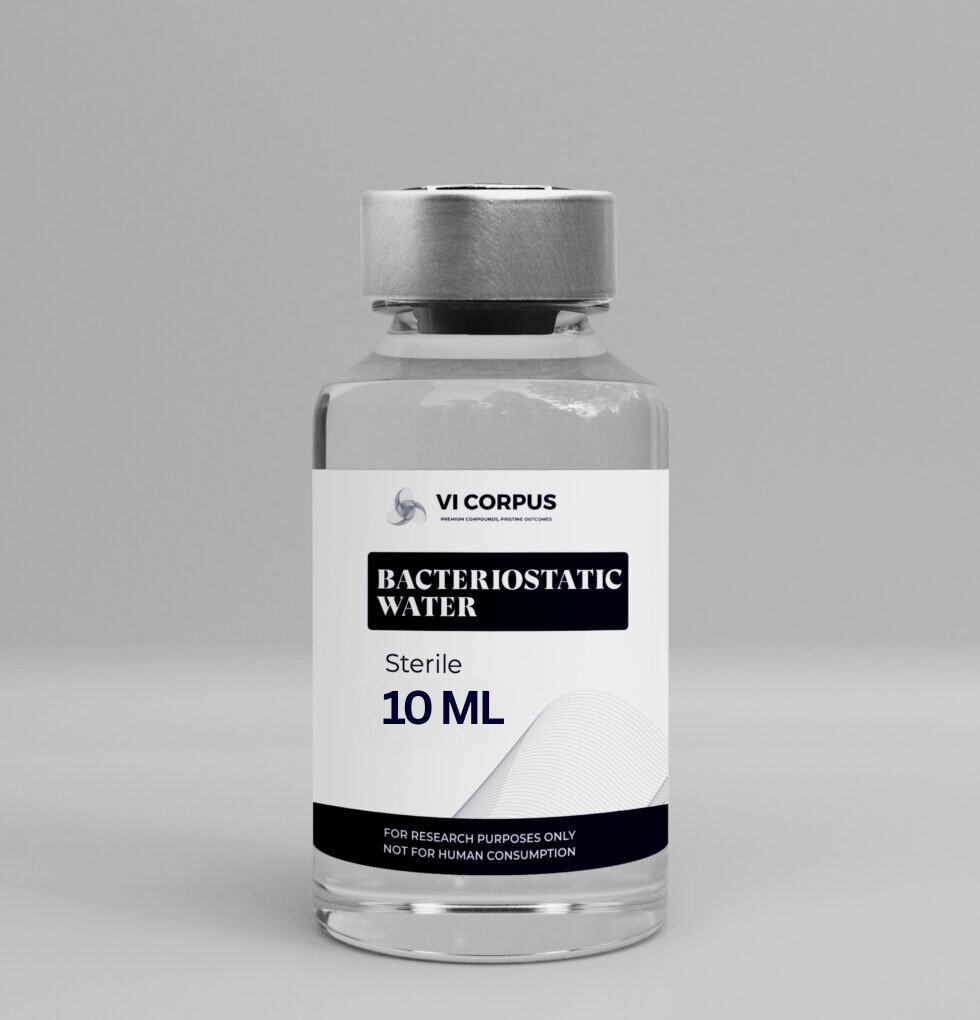
Bacteriostatic water 10ml vial with 0.9% benzyl alcohol, used to reconstitute lyophilised research peptides. Multi-draw format, shipped same day from Australia. For laboratory research use only.
For laboratory research use only. Not for human consumption. Ships from Australia.
Bacteriostatic water 10ml vials contain sterile water with 0.9% benzyl alcohol, which slows bacterial growth after the stopper is pierced. Vi Corpus stocks BAC water so Australian laboratories can reconstitute lyophilised peptides such as BPC-157, TB-500 and CJC-1295 in the same order.
Why labs use bacteriostatic water 10ml vials
- Multi-draw format. The preservative allows several withdrawals from one vial, unlike single-use sterile water.
- Peptide compatible. It is the standard diluent for most lyophilised research peptides.
- Convenient size. A 10 ml vial suits several small peptide vials.
- Ships with your peptides. Add it to any order for same-day dispatch from Australia.
Bacteriostatic water 10ml specifications
| Contents | Sterile water with 0.9% benzyl alcohol |
|---|---|
| Volume | 10 ml per vial |
| Closure | Rubber stopper with flip-off seal |
| Use | Reconstitution of lyophilised research compounds |
| Storage | Room temperature before opening; follow your lab protocol after first use |
How bacteriostatic water is used in the lab
Researchers draw the required volume with a sterile syringe and add it slowly down the inside wall of the peptide vial. Then they swirl gently rather than shake, because shaking can damage fragile peptide chains. The amount of water simply sets the concentration, so labs record the volume used for every vial. Our free peptide reconstitution calculator helps with the maths.
Bacteriostatic water vs sterile water
Sterile water has no preservative, so it is meant for a single use. By contrast, bacteriostatic water keeps a pierced vial usable for longer. However, benzyl alcohol is not suitable for every application, so always check your study protocol first. For most peptide work, though, BAC water remains the practical default because one vial can serve a full series of reconstitutions.
Frequently asked questions
Which peptides need BAC water?
Most lyophilised peptides in our peptides range are reconstituted with it.
Is this product for injection in people?
No. It is supplied for laboratory research use only.